
Pasta By Design
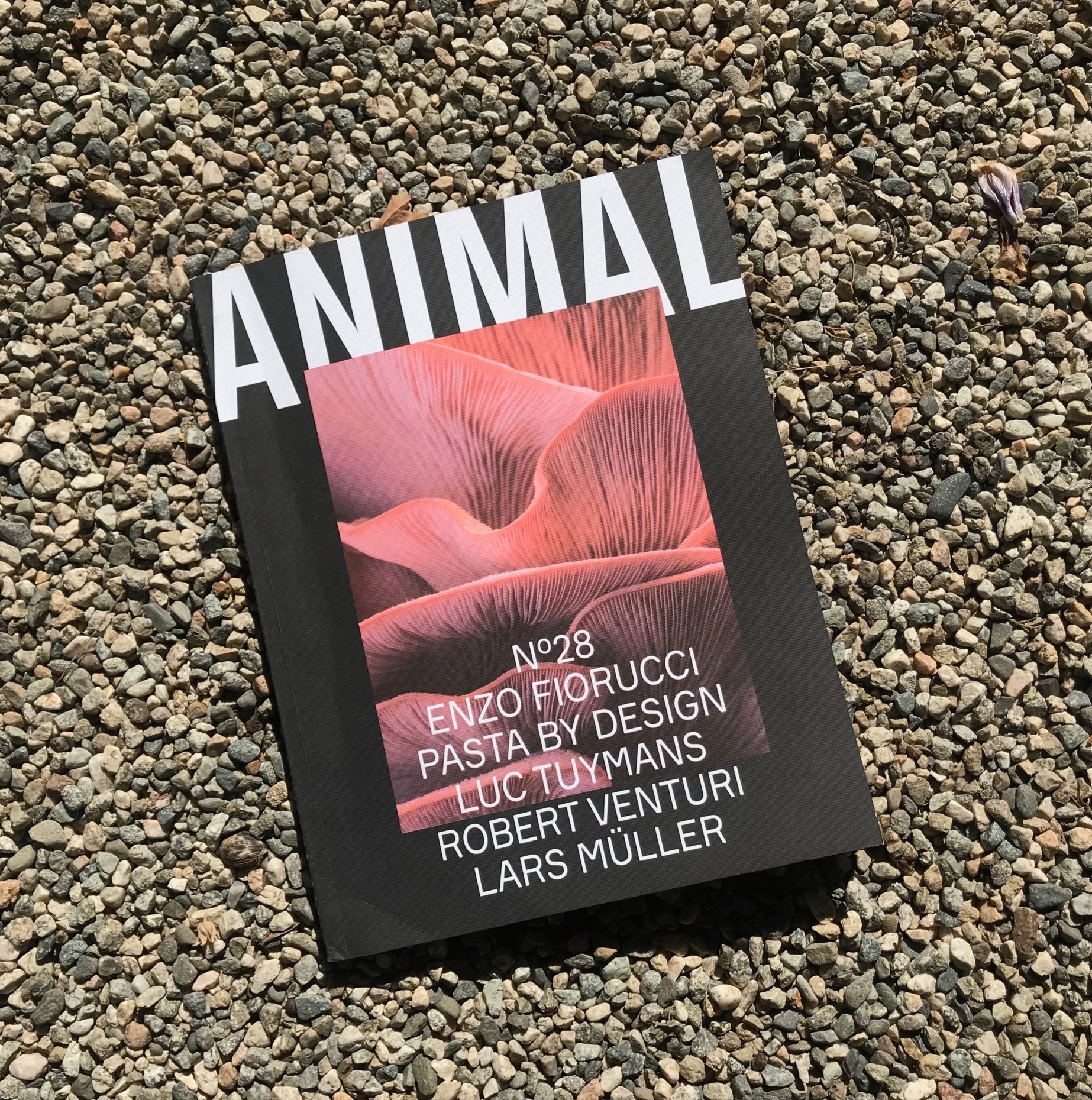
Originally published in Animal Magazine
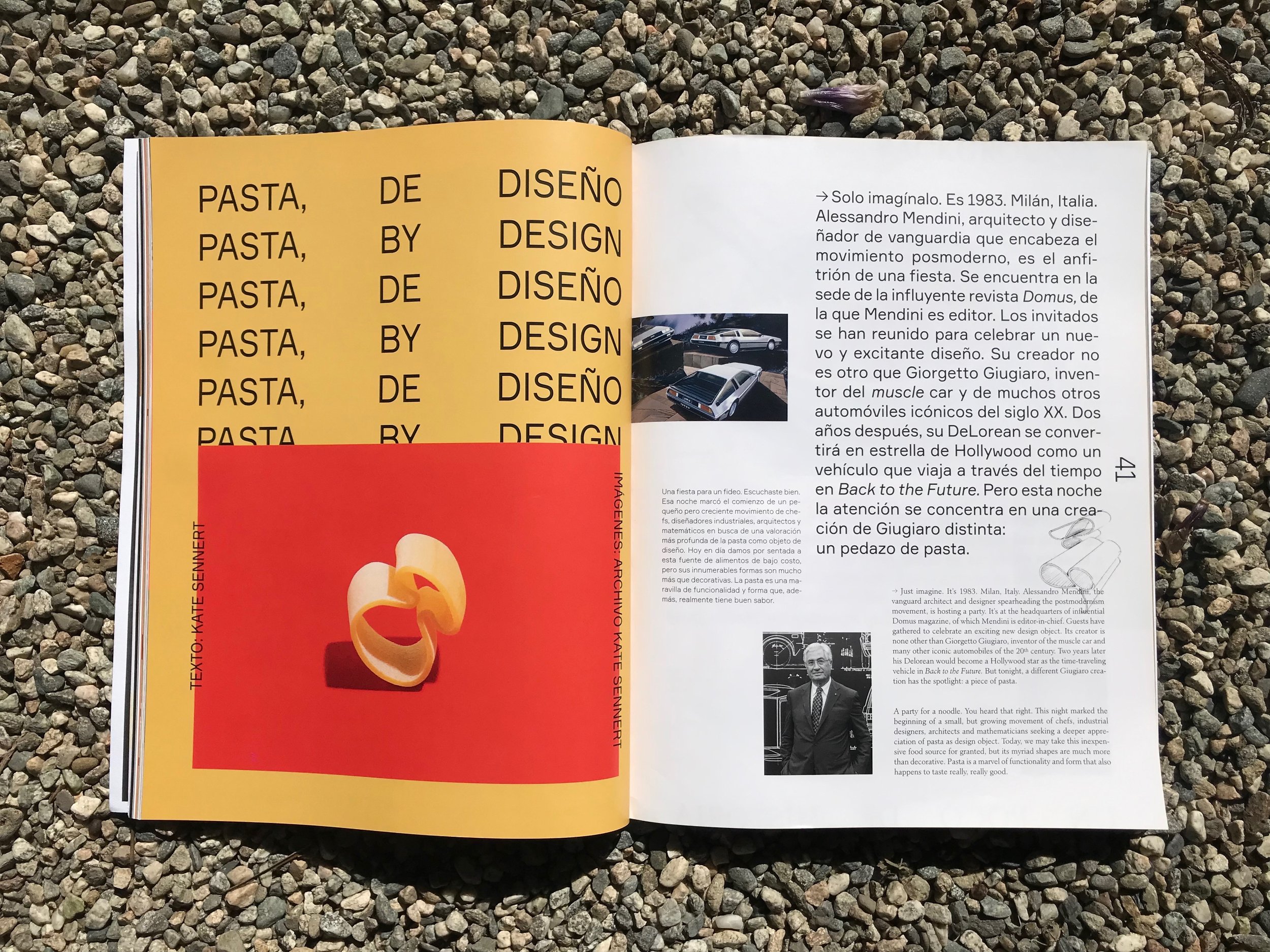
Just imagine. It’s 1983. Milan, Italy.
Alessandro Mendini, the vanguard architect and designer spearheading the postmodernism movement, is hosting a party. It’s at the headquarters of influential Domus magazine, of which Mendini is editor-in-chief. Guests have gathered to celebrate an exciting new design object. Its creator is none other than Giorgetto Giugiaro, the visionary behind several iconic 20th-century automobiles. Two years later, Giugiaro’s DeLorean would achieve Hollywood-star status as the time-traveling vehicle in Back to the Future. But tonight, a different creation of his takes the spotlight: A singular piece of pasta.
A party for pasta. You heard that right.
The night marked the beginning of a small but growing movement of chefs, industrial designers, architects, and mathematicians seeking a deeper appreciation of pasta as a feat of design. Today we take this humble food for granted, but its myriad shapes are much more than decorative. Pasta is a marvel of form or functionality that also happens to please the palate.
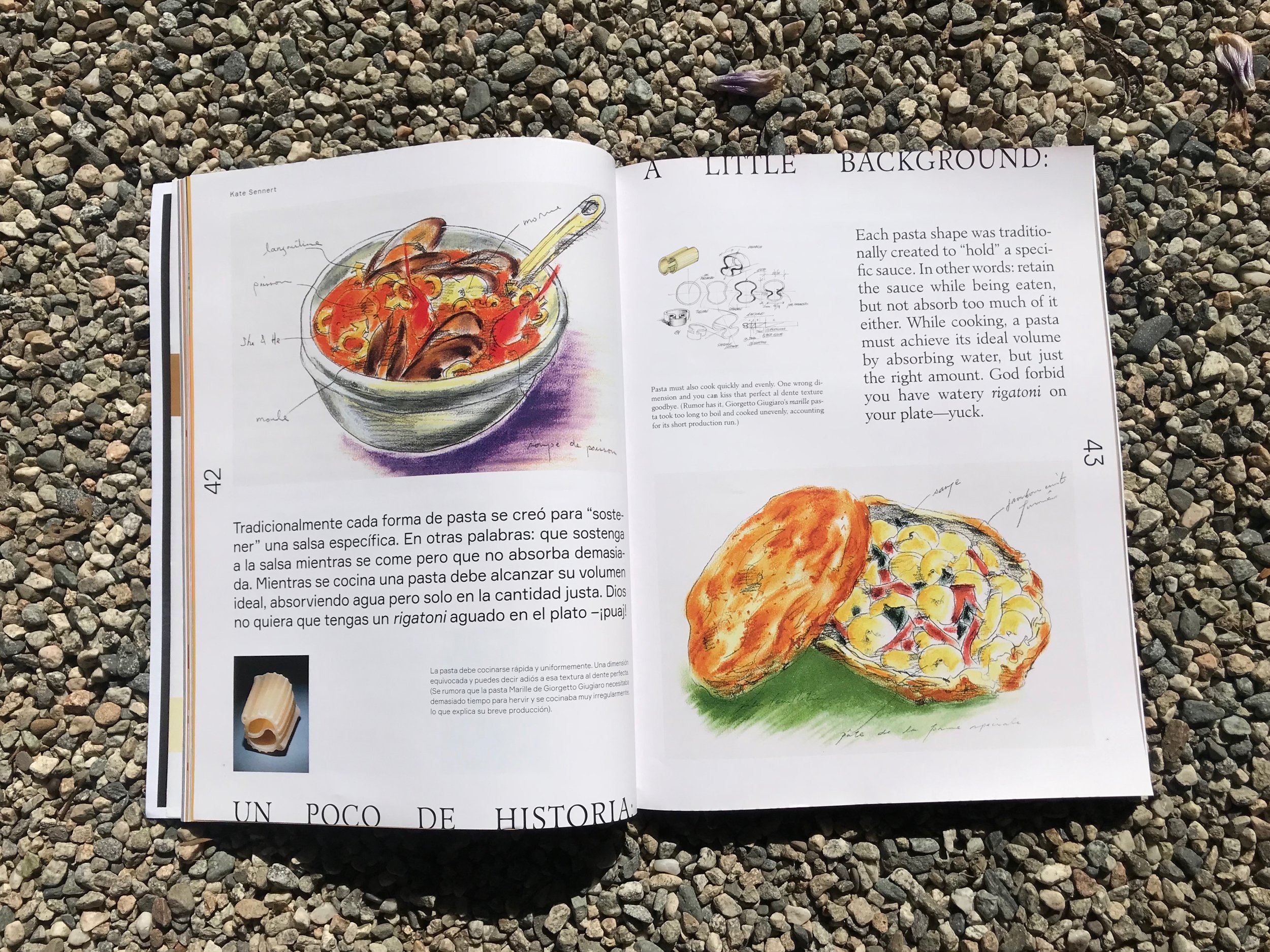
A little background: each pasta shape was traditionally created to ’hold’ a specific sauce. In other words, retain the sauce while being eaten, but not absorb too much either. While cooking, a pasta must achieve its ideal volume by absorbing water, but just the right amount. God forbid you have watery rigatoni on your plate. It should also cook quickly and evenly. One wrong dimension and you can kiss that ideal al dente texture goodbye. (Rumor has it that Giorgetto Giugiaro’s ‘marille’ pasta took too long to boil with uneven results, accounting for its short production run.)
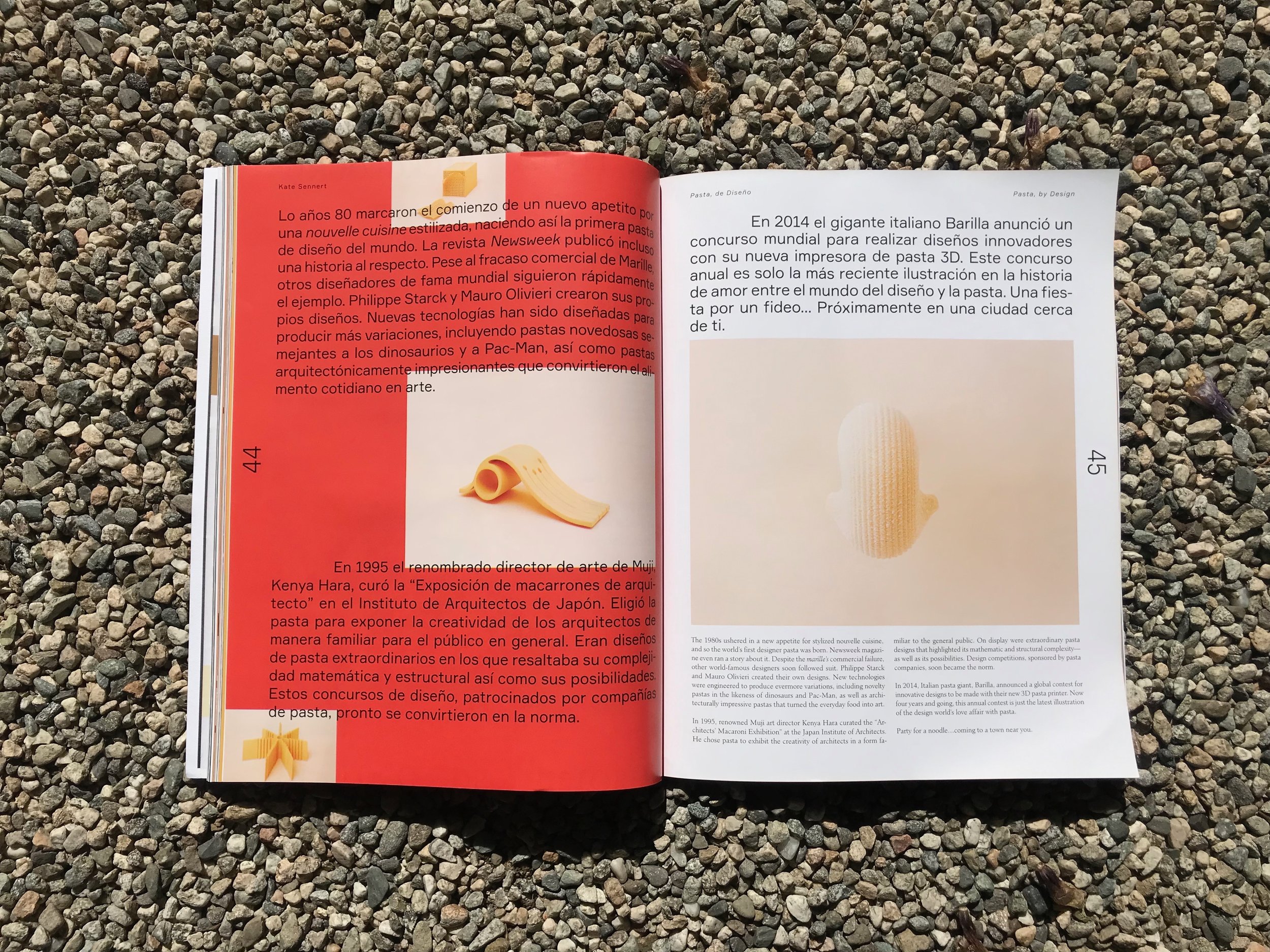
The 1980s ushered in a new appetite for stylized nouvelle cuisine, and with it the world’s first designer pasta was born. Newsweek magazine even ran a story about it. Despite the marille’s commercial failure, other world-famous designers soon followed suit. Philippe Starck and Mauro Olivieri created their own designs. New technologies were engineered to produce ever more variations, including novelty pastas in the likeness of dinosaurs and Pac-Man, as well as architecturally impressive pastas that turned the everyday food into art.
In 1995, renowned Muji art director Kenya Hara curated the Architects’ Macaroni Exhibition at the Japan Institute of Architects. He chose pasta to exhibit the creativity of architects in a form familiar to the general public. On display were extraordinary pasta designs that highlighted its mathematical and structural complexity—as well as its possibilities. Design competitions, sponsored by pasta companies, soon became the norm.
In 2014, Italian pasta giant Barilla announced a global contest for innovative designs to be made with their new 3D pasta printer. Now four years and going, this annual contest is just the latest illustration of the design world’s love affair with pasta.
A party for pasta…coming to a town near you.